The role of banks in financing the economy
Banks and capital markets are the two main channels through which private capital is deployed to grow the EU economy.
For companies, particularly SMEs, banks remain the main source of external finance. They provide loans and credit facilities to support working capital and long-term investment; factoring and other commercial-finance solutions to help businesses manage cash flow; and payments, guarantees and risk-management services that support their day-to-day activities. They also facilitate international trade through letters of credit, guarantees and export-finance solutions, including financing supported by Export Credit Agencies.
Banks are also central players in capital markets, acting as users (issuers and investors) as well as advisers, intermediaries and service providers to their clients. They help public and private organisations assess their financing needs and choose the most appropriate funding route; advise on capital raising, mergers, acquisitions and restructurings; underwrite and place shares and bonds; provide liquidity in secondary markets; and offer hedging solutions that help businesses manage interest-rate, currency and commodity risks.
Beyond financing transactions themselves, banks are integral to the functioning of capital markets. They provide custody, settlement and asset-servicing services, connect issuers with investors and, through branches, digital platforms and advisers, give retail savers access to investment opportunities. Through brokerage, asset management and investment research, they also serve institutional investors and help issuers reach a broader investor base. This retains the substance of your existing capital-markets section while placing it within the wider financing story.

Our objectives
With Europe needing around €1.4 trillion of additional investment a year (EBF analysis with Oliver Wyman), bank lending, capital markets and public financing must reinforce one another. Therefore, these are EBF’s strategic objectives:
Enable banks to finance more of Europe’s growth: Europe needs a more integrated, efficient and competitive banking sector that can finance growth while preserving resilience and financial stability. This means reducing unnecessary regulatory complexity, improving proportionality, removing barriers to cross-border banking and ensuring that capital and liquidity can be used more efficiently across the Single Market. These are now central themes in the Commission’s 2026 banking competitiveness agenda.
Build deeper, more integrated and attractive capital markets: Delivering the Savings and Investments Union is a key EBF priority. Alongside regulatory reform, Europe needs a shared capital markets mindset focused on scale, integration and competitiveness to turn ambition into implementation.
Create an ecosystem where innovation can be financed and scaled: Mobilising capital is not enough: Europe must also create investable opportunities and viable business cases. The EBF supports an ecosystem that helps innovative companies (particularly SMEs and scale-ups) turn ideas and intangible assets into growth, and that makes effective use of public-private partnerships, guarantees, risk-sharing and blended finance to crowd in private investment where markets alone cannot bear the risk.


The Savings and Investments Union (SIU)
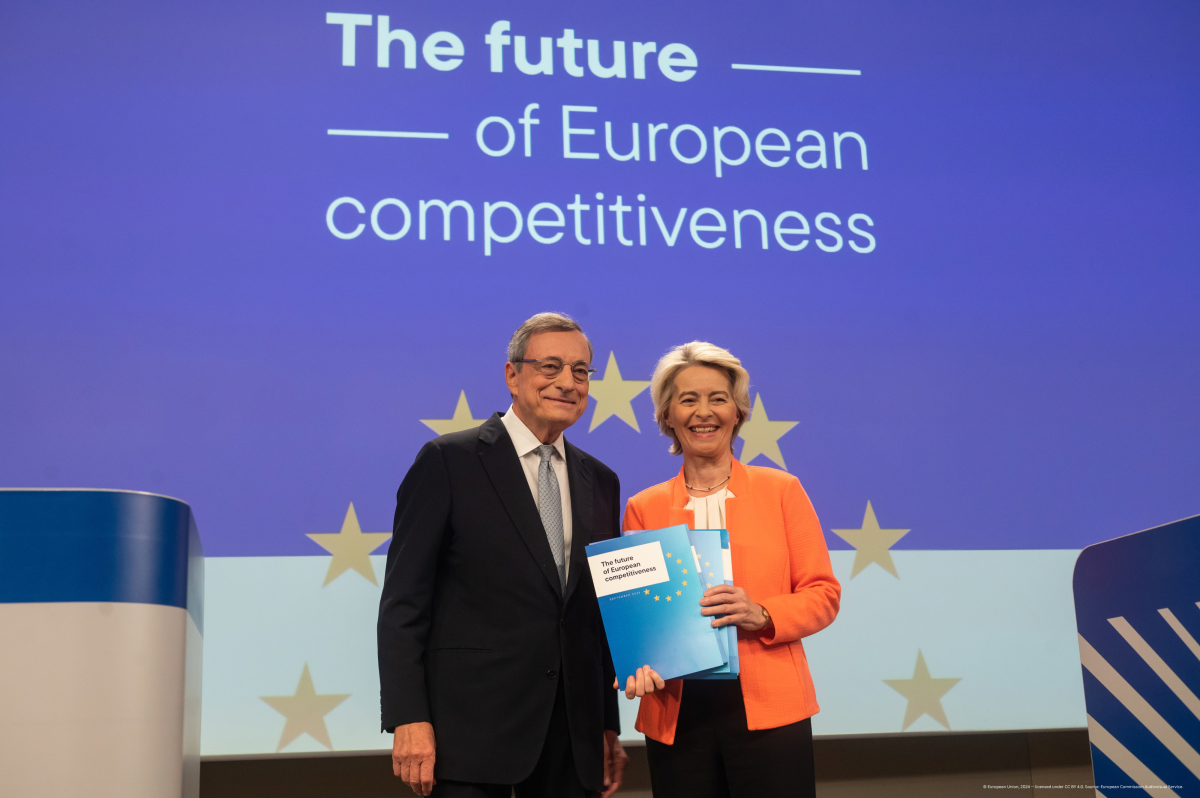
Building on the progress achieved under the Capital Markets Union (CMU), the Savings and Investments Union (SIU) is the European Commission’s flagship reform project in the capital market space. It aims to deepen and integrate European capital markets, remove barriers to cross-border investment, and better channel savings into productive investment. The gap to close is wide: EU equity markets, for instance, only account for around 14% of global activity. As highlighted by the Draghi, Letta and Noyer reports, closing it is essential to strengthening Europe's long-term competitiveness.
The SIU complements the Banking Union by strengthening market-based financing alongside Europe's bank-based financial system, which provides around 65% of financing to the non-financial sector. Together, deeper capital markets and resilient banks can broaden financing and investment opportunities for households and businesses and support a more competitive and integrated European economy.
EBF priorities to complete the SIU
The EBF strongly supports the objectives of the SIU. To help translate those objectives into deeper, more integrated and globally competitive European capital markets, the EBF focuses on the following priorities:
1. Reducing market fragmentation: Removing legal, tax and operational barriers to cross-border investment and strengthening the Single Market through a simpler, more harmonised regulatory framework.
2. Growing the investor base: Helping more European households access capital markets through a competitive, transparent and investor-friendly framework.
3. Promoting efficient and attractive European financial markets: Improving interoperability, connectivity and competition across trading and post-trading infrastructures to reduce costs and enhance market efficiency.
4. Enhancing supervisory convergence: Supporting greater consistency and efficiency in capital markets supervision to strengthen market confidence and support further market integration.
5. Facilitating institutional investment: Promoting investment in equity, private equity, venture capital and other alternative asset classes to improve companies' access to long-term financing and support innovation.
6. Reviving securitisation: Developing a proportionate and effective securitisation framework to expand financing capacity, improve capital efficiency and broaden investment opportunities.
7. Supporting innovation: Developing an innovation-friendly regulatory framework that enables the digital transformation and modernisation of European capital markets.
Beyond regulation: EBF’s participation in industry groups
The EBF actively contributes to several public and industry initiatives supporting the integration, efficiency and modernisation of European capital markets.
The EU T+1 Industry Committee
The transition from a T+2 to a T+1 settlement cycle in the EU will take place on 11 October 2027, alongside the United Kingdom and Switzerland. Moving to T+1 is expected to strengthen the efficiency and competitiveness of the EU's post-trade ecosystem, supporting well-functioning capital markets and the objectives of the Savings and Investments Union (SIU).
The transition requires close coordination across the financial sector. To support this work, the EU T+1 Industry Committee was established in 2024 and has developed the High-Level Roadmap for the implementation of T+1 settlement in EU securities markets, which sets out the operational, technical and regulatory changes required across the chain and the timeline for completing them.
The EBF is an active participant in the EU T+1 Industry Committee, alongside other trade associations, and serves as part of its Secretariat.
Banks and other market participants preparing for the transition can find the Roadmap, detailed workstream guidance and the latest updates on the EU T+1 Industry Committee website.
FinDatEx (Financial Data Exchange)
FinDatEx, established in 2019 by representatives of the European financial services sector, supports the development and use of standardised technical templates for the exchange of data between product manufacturers, distributors and other stakeholders when applying EU legislation.
FinDatEx brings together the European Banking Federation (EBF), the European Fund and Asset Management Association (EFAMA), Insurance Europe, the European Savings and Retail Banking Group (ESBG), the European Association of Cooperative Banks (EACB), and the European Structured Investment Products Association (EUSIPA).
The EBF acts as Secretariat of the FinDatEx MiFID Working Group, which is responsible for the European MiFID Template (EMT). General queries on the Group's work can be sent to mifid@findatex.eu.
Further information on FinDatEx, including the full set of templates and the latest versions, is available on the FinDatEx website.
AMI-SeCo, (Advisory groups on Market Infrastructures)
The European Central Bank's Advisory Group on Market Infrastructures for Securities and Collateral (AMI-SeCo) provides a forum for dialogue between the ECB and market participants on securities clearing, settlement and collateral management.
The Group supports discussion on the functioning and development of post-trade market infrastructures, bringing together representatives of banks active in the European Union as T2S users, central securities depositories (CSDs), central counterparties (CCPs) and national central banks. (ECB website)
Areas of expertise

















Related news & insights
Our Capital Markets team would be happy to help.