The role of banks in digital innovation & cyber resilience
Banks deploy technology to improve their operations and customer services. The banking sector is one of the most cyber-mature sectors, with banks investing continuously in safeguards and cyber-resilience measures. In parallel, technological developments are used dynamically to offer innovative financial services to businesses and consumers.
The EBF works to promote a regulatory and supervisory environment where banks can expand their digital potential to serve their customers seamlessly and securely. With this objective, EBF is the European platform that brings together banks, policymakers, supervisors, regulators, international organisations, and law enforcement in an ecosystem approach that drives innovation and resilience for the future of digital finance.

Our objectives
A harmonised, technology-neutral and innovation-friendly EU financial services framework
A European banking sector characterised by top-notch digital operation resilience that quickly adapts to emerging technology risks
A payments market for the digital age where all forms of digital assets can coexist to cover all kinds of customers' payment needs
A hub of collaboration in the fight against digital fraud with an ecosystem approach
Fair competition in a digitally transformed market, ensuring a level playing field and appropriate safeguards for consumer protection
EBF’s contribution to the dialogue on digital and cyber
To advance the EBF's work on digital innovation and cyber-resilience, the Federation facilitates informed dialogue between bank experts, national banking associations, policy makers, regulators, supervisors, international organisations and fora, technology providers. Through multi-level engagement platforms and expert groups, the EBF fosters structured dialogue with key authorities including:
- European Commission (EC), European Parliament (EP), and European Council
- European Banking Authority (EBA)
- European Central Bank (ECB) /Single Supervisory Mechanism (SSM)
- Euro Retail Payments Board (ERPB)
- Payments Systems Market Expert Group (PSMEG)
- European Commission GDPR Multistakeholder Group
- G7 Cyber Expert Group (G7 CEG)
- Financial Stability Board (FSB)
- International Monetary Fund (IMF)
- UN Office on Drugs and Crime (UNODC)
- Europol's European Cyber Crime Centre (EC3)
- EU Agency for Cybersecurity (ENISA)

International cooperation
Digital innovation and cyber resilience are by nature borderless. The EBF represents the European banking sector in the international fora, where actions of common interest are being shaped. The global outreach is instrumental in addressing cross-border challenges such as digital fraud and scams, and in ensuring that the transition to emerging technologies such as AI and quantum is coordinated. EBF contributes to the Industry Group of the G7 Cyber Expert Group and is a member of the IBFed.
G7 Cyber Expert Group - Industry Group: Made up of ministries of finance and central banks from the G7 economies, the Group has created an industry forum for public-private cooperation on financial-sector cyber resilience. The EBF represents the EU – the Group's eighth jurisdiction – within this forum.
Participating jurisdictions: Canada, France, Germany, Italy, Japan, the United Kingdom, the United States and the EU (represented by the EBF)
The International Banking Federation (IBFed): IBFed was formed in 2004 to represent the combined views of the global banking sector. The IBFed collectively represents more than 18,000 banks, including more than two thirds of the largest 1,000 banks in the world. The EBF is represented in IBFed's Fraud and Scams Working Group and Digital Transformation Working Group.
Strategic partnerships for cybersecurity
Security in the digital age is an ecosystem built on trust and information sharing. To safeguard the integrity of the European banking sector, we maintain deep-rooted, formal alliances with the European law enforcement and cybersecurity authorities. By bridging the gap between private-sector expertise and public-sector oversight, these long-standing collaborations ensure that our members are not just reacting to threats, but actively contribute to a resilient financial future.
Awareness raising campaigns
EC3-EBF CyberScams
Cybercriminals are constantly looking for ways to make money at your expense. Individuals and organisations often fall prey to frauds that involve various forms of social engineering techniques, where the information required is garnered from a person rather than breaking into a system.
These scams are typical examples of how cyber attackers can easily play on people’s psychology and perceptions. The tips provided here are aimed to help you protect yourself. Awareness is your best defence! Learn more
No More Ransom
Skills and awareness in the digital space are essential also for personal security. The EBF Digital Skills strategy is therefore very closely linked with its work on cybersecurity. EBF has joined forces with Europol EC3, the European Cybercrime Center of the EU Agency for Law Enforcement Cooperation, promoting awareness on digital security and cybercrime. EBF is also regularly supporting the European Cybersecurity Month, organised by ENISA every year in October.
- EBF Cybersecurity Conference 2018 – Active defence in banking
- EBF Cybersecurity Conference 2017 – special focus on digital skills
- ECSM deployment report 2018
Don’t be a mule
- Europol EC3, FinTech FinCrime Exchange, INTERPOL and Western Union 422 arrested and 4,031 money mules identified in global crackdown on money laundering
- Europol EC3, EBF, Eurojus Joint Press release: More than 650 banks support global action against money laundering
- Europol EC3, EBF, Eurojus Joint Press release: Over 1500 money mules identified in worldwide money laundering sting
- Europol EC3 – EBF awareness campaign on Cyberscams: Take control of your digital life!
- Press release: Europol & EBF launch campaign on 7 most common online financial scams
- Europol – awareness and prevention guides
- Press release: Europol & EBF join forces to fight cybercrime
Key EBF positions
EBF joins the call for boosting fraud prevention efforts across the fraud chain - 17 September 2024
Report by Euro Retail Payments Board (ERPB) Working Group on fraud related to retail payments - September 2024
Instant Payments Regulation (IPR)
EBF position paper on Proposal for Instant Payment Regulation - 6 February 2023
EBF views on the digital euro, payment services and financial data access proposals (2023) - 28 June 2023
EBF position paper on Regulatory Technical Standards (RTS) on ICT Incident Classification - 15 January 2024
Joint statement on the ongoing process for the finalizing Cybersecurity Resilience Act – duplication with DORA - 23 November 2023
EBF key considerations following the publication of the Cyber Resilience Act (CRA) proposal - 6 March 2023
Digital Operational Resilience Framework: EBF key messages - 6 April 2020
EBF joins the calls for removing sovereignty requirements from European Cybersecurity Certification Scheme for Cloud Services (EUCS) - 21 November 2023
Joint statement on Financial Data Sharing: Finding a sound approach for an effective Open Finance Framework - 9 December 2024
EBF views on Open Finance: towards a fit-for-market approach - 30 March 2023
EBF response to the European Commission Call for Evidence on the Report on the General Data Protection Regulation (Art. 97) - 12 February 2024
Framework for Financial Data Access (FIDA)
EBF position on the European Commission’s proposal for a Framework for Financial Data Access (FIDA) - EBF - 11 December 2023
EBF views on the digital euro, payment services and financial data access proposals (2023) - 28 June 2023
EBF Simply competitive paper - 18 July 2025
Distributed ledger technology
NIS2 Directive
European Commission’s proposal for a revised Directive on Security of Network and Information Systems (NIS2): EBF key messages - 17 June 2021
EBF key messages to the EBA consultation on its draft Guidelines on ICT and security risk management - 13 March 2019
Events and other activities
DPO Forum
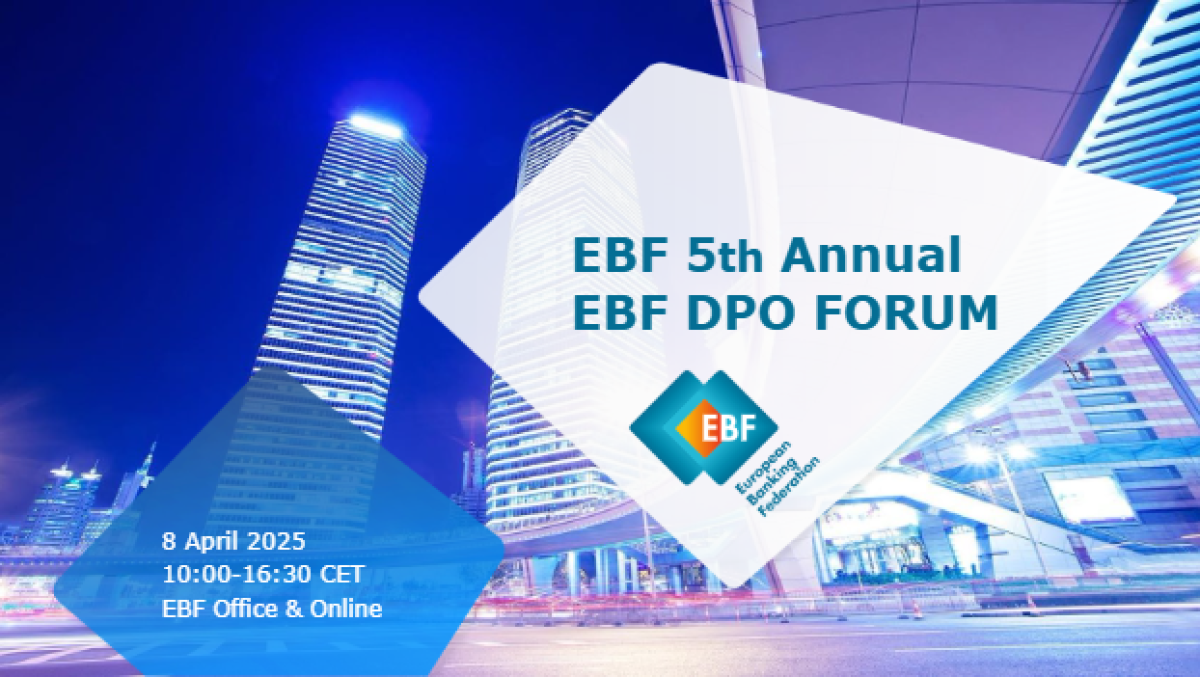
On 8 April 2025, the European Banking Federation (EBF) hosted the fifth edition of its Data Protection Officers Forum in Brussels, bringing together over 70 DPOs from 16 countries alongside Data Protection Authorities, the European Data Protection Board and the European Commission. This year's edition focused on the interplay between the GDPR and the AI Act, information-sharing for anti-money laundering purposes within Public-Private Partnerships, and how the GDPR can support innovative AI development in banking while safeguarding personal data.
“Digital Operational Resilience Act (DORA): Critical Functions & Heterogeneous Systems: Building Digital Resilience Across the Stack”, in partnership with Deloitte.
On 20 November 2025, the European Banking Federation's Innovation and Cybersecurity team held a dedicated workshop on the Digital Operational Resilience Act (DORA) in partnership with Deloitte, bringing together representatives from leading European banks and national banking associations. The discussion focused on key implementation challenges, including critical ICT function identification, end-to-end value chain mapping, data dependencies, and the integration of resilience requirements into legacy and heterogeneous IT environments.
Payment Fraud “Unmasking the Payment Fraud ecosystem: Best Practices and Collaboration”
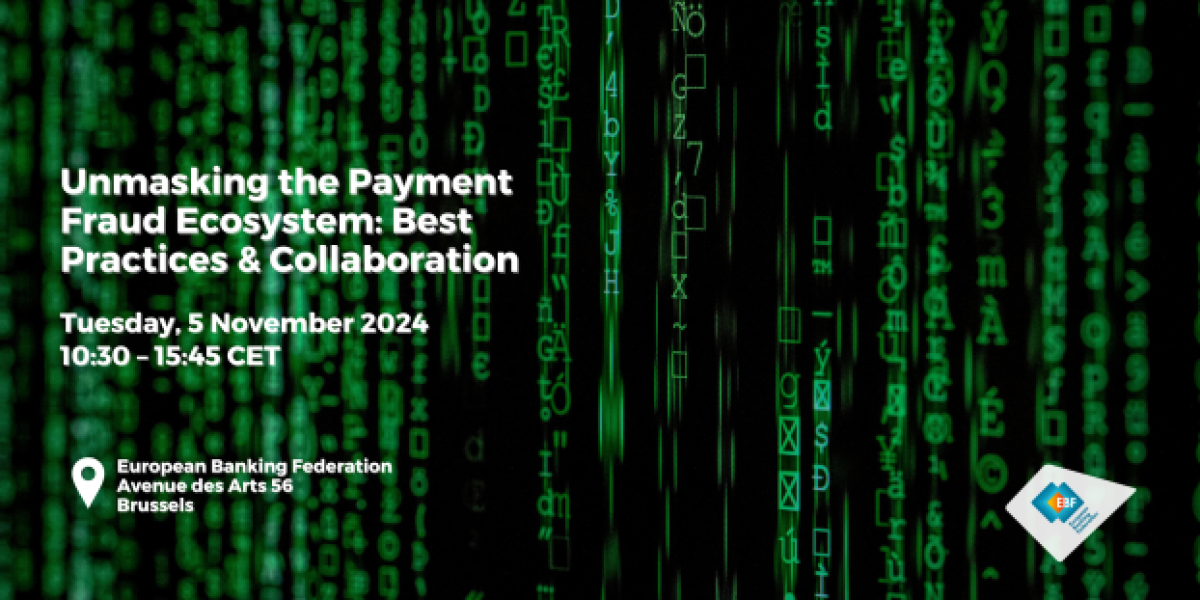
On 5 November 2024, the European Banking Federation (EBF) hosted "Unmasking the Payment Fraud Ecosystem," a "Spot the Scam" event at its Brussels premises, bringing together stakeholders from European institutions, civil society, and the banking, technology and telecommunications sectors to discuss effective approaches to fraud prevention and response across the payments ecosystem. Discussions highlighted the growing complexity of fraud and fraudsters' increasing use of technologies such as AI, alongside the significant efforts banks are already undertaking, from strong customer authentication to awareness campaigns and information-sharing mechanisms. Participants underlined the need for stronger cross-sector collaboration between banks, telecoms, tech companies, social media platforms, public authorities and civil society, as well as EU policy alignment to enable more effective, coordinated action against fraud.
Areas of expertise
Each of the topics above is explored in greater depth in the sections below, offering a closer look at the EBF's work and positioning on that theme.